
Understanding 2 Peter: A Complete Guide for Christians
2 Peter explained: grow in faith, resist false teachers, and stand firm in Christ's certain return. A complete guide for Christians today.
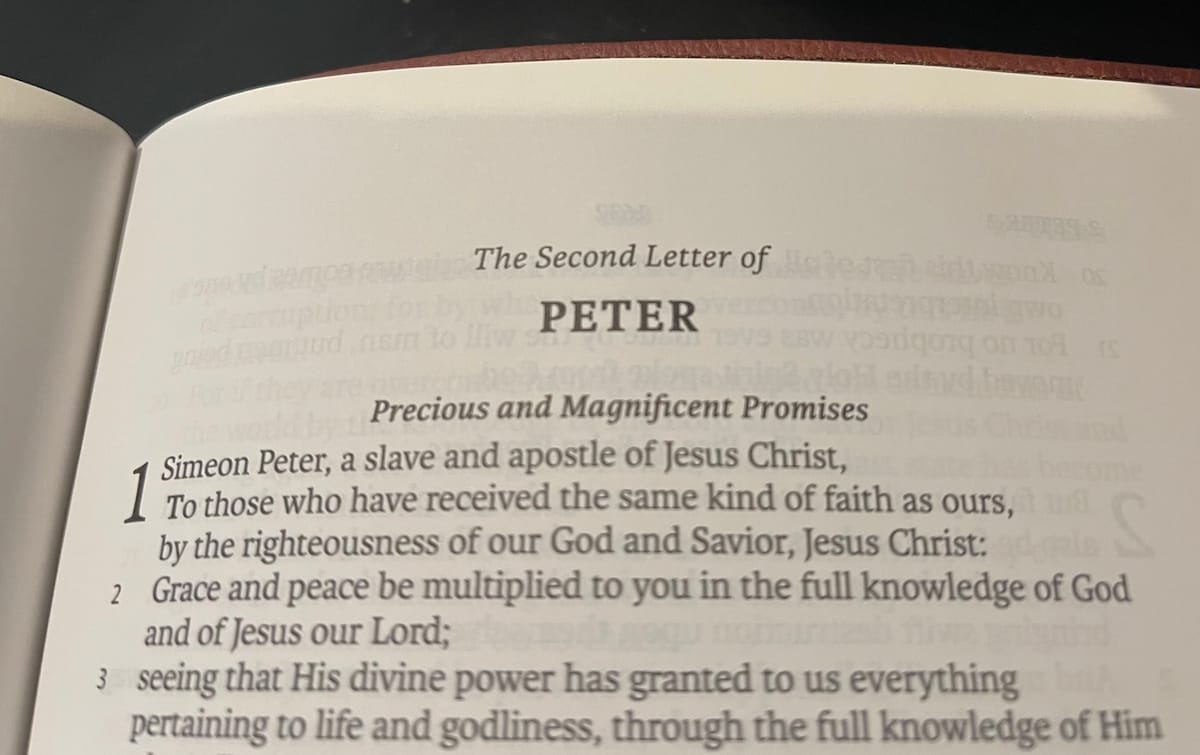
The Second Epistle of Peter stands as a final testament—an urgent warning from an aging apostle who knows his death is imminent. Written to combat false teachers who were corrupting the gospel and leading believers astray, this letter calls Christians to grow in knowledge of Christ, remain faithful to apostolic teaching, and live in light of Christ's certain return. For anyone concerned about doctrinal compromise, moral drift in the church, or the tension between God's patience and promised judgment, Second Peter offers penetrating insight and solemn warning about the cost of abandoning truth.
1. Central Theme: Growing in Truth While Awaiting Christ's Return
The central message of Second Peter is: Believers must grow in the knowledge of Christ and remain faithful to apostolic truth, resisting false teachers and living holy lives in confident expectation of Christ's return and the new heavens and new earth.
Peter frames his letter around two critical concerns: spiritual growth and doctrinal faithfulness. He opens by calling believers to supplement their faith with virtue, knowledge, self-control, steadfastness, godliness, brotherly affection, and love (1:5-7). This is not optional enhancement but essential progression—"if these qualities are yours and are increasing, they keep you from being ineffective or unfruitful in the knowledge of our Lord Jesus Christ" (1:8). Spiritual maturity requires intentional effort grounded in God's divine power and precious promises (1:3-4).
But Peter's concern is not merely positive instruction in godliness; he confronts a dangerous threat to the church. False teachers have infiltrated the community, "secretly bringing in destructive heresies, even denying the Master who bought them" (2:1). These false teachers promote moral license, exploit believers for financial gain, and mock the promise of Christ's return. Peter's response is severe: he pronounces judgment on them using examples from Israel's history and warns believers not to be led astray by their deceptive words.
The epistle culminates in Peter's defense of Christ's return. Scoffers ask, "Where is the promise of his coming?" (3:4), interpreting the delay as evidence that judgment will never come. Peter responds by reframing God's apparent delay as patience—"The Lord is not slow to fulfill his promise as some count slowness, but is patient toward you, not wishing that any should perish, but that all should reach repentance" (3:9). Yet this patience has limits. The day of the Lord will come "like a thief" (3:10), bringing both judgment and the promise of "new heavens and a new earth in which righteousness dwells" (3:13). This eschatological certainty should produce holy living and eager anticipation in believers.
2. Purpose: Warning Against False Teachers and Doctrinal Compromise
Peter wrote this epistle with urgent pastoral purpose: To warn believers against false teachers who were corrupting doctrine and morals, to defend the certainty of Christ's return against skeptics, and to encourage continued growth in grace and knowledge of Christ.
The original readers faced a serious internal threat. False teachers had arisen within the Christian community—not obvious outsiders but those who claimed Christian identity while teaching destructive error. These teachers denied key aspects of Christian faith, possibly rejecting Jesus' lordship or the reality of future judgment. They promoted moral libertinism, arguing that freedom in Christ meant freedom to indulge fleshly desires without consequence. They "despise authority" (2:10) and "count it pleasure to revel in the daytime" (2:13), demonstrating that their theology led to immoral practice.
These false teachers were also financially exploiting believers. Peter charges that "in their greed they will exploit you with false words" (2:3) and describes them as having "hearts trained in greed" (2:14). Their teaching served their own appetites and ambitions rather than God's truth and the church's wellbeing. Most dangerously, they mocked the doctrine of Christ's return, asking cynically where the promised coming was and arguing that the world continues unchanged (3:3-4). This denial of eschatological judgment removed the moral urgency from Christian faith and opened the door to compromise.
Peter responds with the authority of an eyewitness and apostle. Writing in what he knows are his final days (1:14), he provides this letter as a lasting reminder of apostolic truth (1:12-15; 3:1-2). He grounds Christian hope not in "cleverly devised myths" but in the historical reality of Jesus' transfiguration, which he personally witnessed (1:16-18). He affirms the reliability of prophetic Scripture against the false teachers' private interpretations (1:19-21). And he warns that judgment on false teachers is as certain as God's past judgments on fallen angels, the ancient world, and Sodom and Gomorrah (2:4-10).
The epistle thus serves as both final testament and urgent warning. Peter wants his readers to remember apostolic teaching after his death (1:15), to recognize and resist false teaching, and to live in light of the certainty—not the uncertainty—of Christ's return.
3. Historical Context: Author, Audience, Date, and Genre
Authorship: The epistle identifies its author as "Simon Peter, a servant and apostle of Jesus Christ" (1:1), and internal evidence supports this claim. The author references being an eyewitness of the Transfiguration (1:16-18), mentions his impending death foretold by Jesus (1:14, cf. John 21:18-19), claims authorship of First Peter (3:1), and writes with apostolic authority. However, Second Peter has been more disputed than any other New Testament book, primarily because its Greek style differs noticeably from First Peter. The solution likely lies in different writing circumstances: while Peter used Silvanus as secretary for First Peter (1 Peter 5:12), he may have written Second Peter more directly or used a different secretary, accounting for stylistic differences. Early church figures including Origen and Jerome acknowledged questions about the epistle but ultimately affirmed its apostolic authority based on its content and early attestation.
Audience: Peter addresses believers who have "obtained a faith of equal standing with ours" (1:1), likely the same general audience as First Peter—Christians in Asia Minor. However, this letter assumes familiarity with First Peter (3:1) and Paul's writings (3:15-16), suggesting a slightly later period when these documents were circulating. The readers faced different challenges than First Peter's audience: rather than external persecution, they confronted internal doctrinal corruption and moral compromise.
Date: Second Peter was likely written in the mid-60s AD, shortly before Peter's martyrdom under Nero (c. AD 64-68). Peter's awareness of his imminent death (1:14) places the letter near the end of his life. The reference to Paul's letters as existing documents (3:15-16) and the emergence of false teachers suggest a somewhat developed church situation. A date around AD 65-67 fits these indicators well.
Genre and Literary Features: Second Peter is a testament—a farewell discourse from a dying leader to his spiritual children. This genre was common in Jewish literature (Jacob in Genesis 49, Moses in Deuteronomy 31-33, Paul in 2 Timothy) and typically includes predictions of future apostasy, warnings against false teaching, and exhortations to remain faithful. Peter employs vivid imagery, harsh polemic against false teachers, and apocalyptic language about the day of the Lord. The epistle also shows literary relationship with Jude, sharing extensive material about false teachers, suggesting either common sources or one author drawing on the other.
4. Special Issues: Important Considerations
The Relationship to Jude: Second Peter 2 shares remarkable similarity with Jude 4-18, including identical examples of judgment and similar descriptions of false teachers. Most scholars believe Peter drew on Jude's earlier letter, adapting its warnings for his own purposes. This demonstrates that early Christian authors freely used and built upon one another's work while maintaining their distinctive emphases.
The "Transfiguration" as Foundation: Peter's appeal to his eyewitness experience of Christ's transfiguration (1:16-18) serves as his answer to false teachers who dismissed apostolic testimony. The transfiguration provided Peter visible confirmation of Christ's glory and coming kingdom, grounding Christian hope in historical reality rather than myth. This emphasis shows that Christian faith rests on apostolic eyewitness testimony to actual events in history.
Apostolic Authority and Scripture: Peter's statement that "no prophecy of Scripture comes from someone's own interpretation" (1:20) and that "men spoke from God as they were carried along by the Holy Spirit" (1:21) provides crucial testimony to biblical inspiration. He also acknowledges Paul's letters as Scripture (3:16), indicating that early Christians recognized apostolic writings as authoritative divine revelation comparable to Old Testament Scripture.
The Day of the Lord: Peter's description of the day of the Lord—when "the heavens will pass away with a roar, and the heavenly bodies will be burned up and dissolved" (3:10)—employs apocalyptic language common in biblical prophecy. Whether this describes literal cosmic destruction or uses figurative language for God's decisive judgment remains debated, but the certainty of judgment and the promise of "new heavens and a new earth" (3:13) are clear.
5. Relation to Scripture and Contemporary Application
Pattern Throughout Scripture: Second Peter stands in continuity with the prophetic tradition of warning God's people against false teachers and idolatry. Like Jeremiah confronting false prophets (Jeremiah 23), Peter exposes those who speak comforting lies while leading people away from truth. His emphasis on the certainty of God's judgment echoes prophetic warnings throughout Scripture that God's patience should never be mistaken for indifference.
Contemporary Relevance:
-
Discernment in the Church: Peter's warnings about false teachers remain urgently relevant. Churches today must exercise careful discernment, testing teaching against apostolic Scripture rather than accepting claims based merely on eloquence or popularity.
-
Moral Accountability: The false teachers' libertinism—claiming freedom while promoting license—mirrors contemporary attempts to separate Christian faith from moral transformation. Peter insists that genuine faith produces godly living.
-
Eschatological Hope: In an age when even some Christians question traditional eschatology, Peter defends the certainty of Christ's return and coming judgment, showing that this hope shapes present holiness.
-
Growing in Grace: Peter's call to supplement faith with increasing virtues (1:5-11) challenges passive Christianity and calls believers to active spiritual development through God's enabling power.
-
Scripture's Authority: Peter's affirmation of Scripture's divine origin and his recognition of apostolic writings as authoritative undergird the church's confidence in biblical reliability and sufficiency.
6. Outline and Structure
I. Greeting and Call to Spiritual Growth (1:1-11)
Peter establishes his apostolic authority and calls believers to grow in Christian virtue, emphasizing that God's divine power has given everything needed for life and godliness.
II. The Apostolic Testimony and Scripture's Reliability (1:12-21)
Knowing death is near, Peter emphasizes the importance of remembering apostolic teaching. He grounds Christian hope in eyewitness testimony to Christ's glory and affirms Scripture's divine inspiration.
III. Warning Against False Teachers (2:1-22)
Peter denounces false teachers with vivid imagery and historical examples of God's judgment. He describes their character, methods, and certain doom while warning believers not to follow their destructive ways.
IV. The Certainty of Christ's Return and Final Exhortation (3:1-18)
Peter defends the doctrine of Christ's return against scoffers, explains the delay as God's patience, and describes the coming day of the Lord. He concludes by urging believers to grow in grace and knowledge of Christ.
Conclusion: Standing Firm Until the End
Second Peter calls believers to vigilance—both in personal spiritual growth and in corporate faithfulness to apostolic truth. False teaching is not merely incorrect ideas but spiritual poison that destroys souls and dishonors Christ. Yet believers need not fear if they remain grounded in Scripture, continue growing in grace, and maintain hope in Christ's certain return.
As you read Second Peter, let it cultivate both spiritual ambition and theological vigilance. Let Peter's urgency as he faces death remind you that truth matters eternally. Most importantly, let this epistle direct you to "grow in the grace and knowledge of our Lord and Savior Jesus Christ" (3:18), the one in whom all God's promises find their fulfillment and who will return to make all things new.
Bibliography
- The CSB Study Bible. Edited by Trevin Wax and Andy McLean. Nashville: Holman Bible Publishers, 2017.
- ESV Study Bible. Edited by Lane T. Dennis and Wayne Grudem. Wheaton, IL: Crossway Bibles, 2008.
- The MacArthur Study Bible. Edited by John MacArthur. Nashville: Thomas Nelson, 1997.
- NIV Biblical Theology Study Bible. Edited by D. A. Carson. Grand Rapids: Zondervan, 2018.
- Reformation Heritage KJV Study Bible. Edited by Joel R. Beeke. Grand Rapids: Reformation Heritage Books, 2014.
- The Reformation Study Bible. Edited by R. C. Sproul. English Standard Version. Orlando, FL: Reformation Trust Publishing, 2015.


Comments ()