

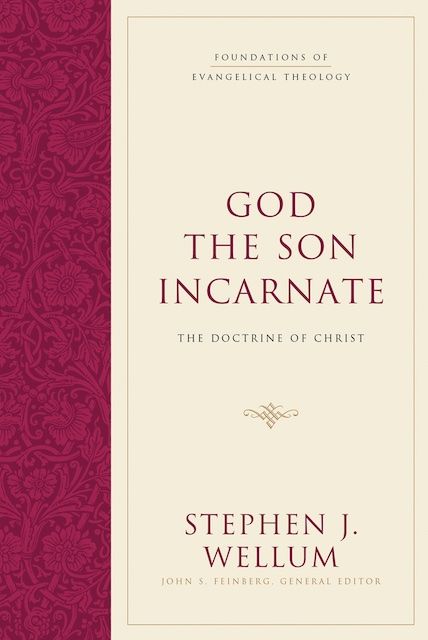
Crossway’s Foundations of Evangelical Theology series is one of the finest series on systematic theology of the 21st century. The sixth volume of this series is on Christology, and it is entitled God the Son Incarnate. Written by Stephen Wellum, this volume has become my preferred resource on Christology.
1. Purpose of God the Son Incarnate
Because one goal of systematic theology is to address the most relevant contemporary issues and threats to orthodox theology, it is helpful for the church to regularly publish new systematic theology works. The Foundations of Evangelical Theology series seeks to address the most relevant theological issues of our day.
This volume on Christology is one of the most important contributions to the series. The focus of this volume is to help Christians develop an accurate, biblical understanding of the person of Jesus Christ.
2. Content of God the Son Incarnate
Wellum’s book is organized into four parts.
- Part 1 reviews the process of how we can know the person of Jesus Christ. Chapter 1 reviews the epistemology of Christology, both its history (enlightenment, modernity, and postmodernism) and the two current threats of historical Jesus research and pluralism. In Chapter 2, Wellum argues for a Christology “from above” and the necessary for Scripture as the final basis for any pursuit of Christology. Christology requires the task of interpreting and applying Scripture to all areas of life.
- Part 2 elaborates on the requirement that the Bible must be read on its own terms. Chapter 3 reviews the structure of the Biblical storyline (creation, fall, redemption, consummation) and God’s six covenants with Adam, Noah, Abraham, Israel, David, and us. Chapter 4 reviews how the typology presented through this structure reveals Christ. Wellum also considers Christ’s self understanding of himself and the apostles identified Christ through his words and works. Chapter 5 examines the deity of Christ, and chapter 6 discusses the full humanity of Christ.
- Part 3 reviews the historical theology of Christ by focusing on specific councils of the early church. Chapter 7 reviews the early heresies and the church’s affirmations in the council of Nicaea. Chapter 8 follows the development from Nicaea to Chalcedon. Chapter 9 draws attention to the developments after the council of Chalcedon.
- Part 4 is devoted to Wellum’s analysis of the most important contemporary issues of Christology. In chapters 10-12, Wellum walks the reader through the development of kenoticism and its two variants prevalent today. Wellum formulates his summary of the orthodox identity of Christ in Chapter 13: Jesus is God the Son Incarnate. Chapter 14 is devoted to defending the coherency of orthodox Christology. It also briefly discusses the extent of Christ’s knowledge (what Christ knew and did not know) and the impeccability of Christ.
3. Commentary of God the Son Incarnate
I appreciated how Wellum begins the book reviewing the epistemology and how it relates to our pursuit of knowing the person of Jesus Christ. Agreement on the method of acquiring knowledge of Christ is an important prerequisite. Wellum succeeds admirably in addressing this foundational issue.
Wellum’s explanation of the Bible storyline and God’s six covenants helps define the role of the Old Testament and the study of Christ. Dispensationalist and covenantalists may quibble on this presentation, but I thoroughly enjoyed this unique overview and how it relates to Christology.
I found Wellum’s discussion on the deity and humanity of Christ in chapters 5 and 6 most helpful. The discussion is thoroughly biblical and comprehensive to defend the orthodox understanding of Jesus’ full deity and humanity.
Wellum’s quick tour of the early church and its pursuit for orthodox Christology should be helpful for many. The summary of issues and heresies shows the importance of the church’s continual pursuit to define and defend the biblical teachings of the person of Christ.
I found the final section of this book least helpful. It is very well written, and the discussion is thoroughly biblical. The issues and topics Wellum identified as most important today did not seem that relevant to me. Perhaps, that will change. That being said, chapters 10-12 were very helpful during my study of Philippians 2.
4. Comparison Analysis
Wellum’s book is my first systematic theology book dedicated to Christology. Most single volume theology books only dedicate one or two chapters on the person of Christ. For example, Wayne Grudem’s Systematic Theology has one chapter on the person of Christ; in fairness, most systematic theologies also dedicate one or two chapters on epistemology.
5. Final Thoughts
Most Christians will be well served just owning a single volume systematic theology like Wayne Grudem’s or John MacArthur’s. But if you want to read a more in-depth analysis on the person of Jesus Christ, Wellum’s book makes an excellent choice.
| Listen on Apple Podcasts | Listen on Google Podcasts |
|---|


